The Role of Venture Capital in the AI and Machine Learning Explosion
17 July 2026
Let’s face it—AI and machine learning have become the rockstars of the tech world. They're everywhere: in our phones, homes, cars, and even our coffee machines (OK, still waiting on that one). But have you ever stopped to wonder what's really pouring fuel on this AI fire? Spoiler alert: it's not just the geeks writing code in basements anymore.
Enter venture capital—the turbocharged money machine that’s been quietly (or not-so-quietly) backing the AI revolution.
So grab your coffee and buckle up, because we’re diving deep into how venture capital (VC) is playing puppet master in the incredibly fast-paced world of artificial intelligence and machine learning. And we’re doing it the fun way. ?
What Is Venture Capital (And Why Should You Care)?
Alright, let’s start with the basics. Venture capital is like that rich aunt who believes in your crazy ideas and is willing to bet big on your potential. It's private funding (we’re talking millions—sometimes billions—of dollars) given to startups and early-stage companies that have high growth potential but not exactly the safest track record yet.But here’s the twist: they’re not giving away free money. Venture capitalists expect a return, preferably a massive one, like "retire at 40 and buy a yacht" level of return.
So why should you care? Because without VC funding, some of the most mind-blowing AI breakthroughs we see today—think ChatGPT, self-driving cars, or that app that makes you look like an anime character—might never have existed.
The Perfect Storm: AI + VC + Timing
Timing, they say, is everything.AI has been around in some form for decades, but it’s only in recent years that things really exploded. Why now? A few reasons:
- Computing power has skyrocketed.
- Big Data is... well, BIGGER than ever.
- Cloud storage makes infrastructure less of a hassle.
- And businesses are desperately chasing automation.
All these factors created the perfect storm, and VCs smelled the opportunity from a mile away. They jumped in like kids at a waterpark.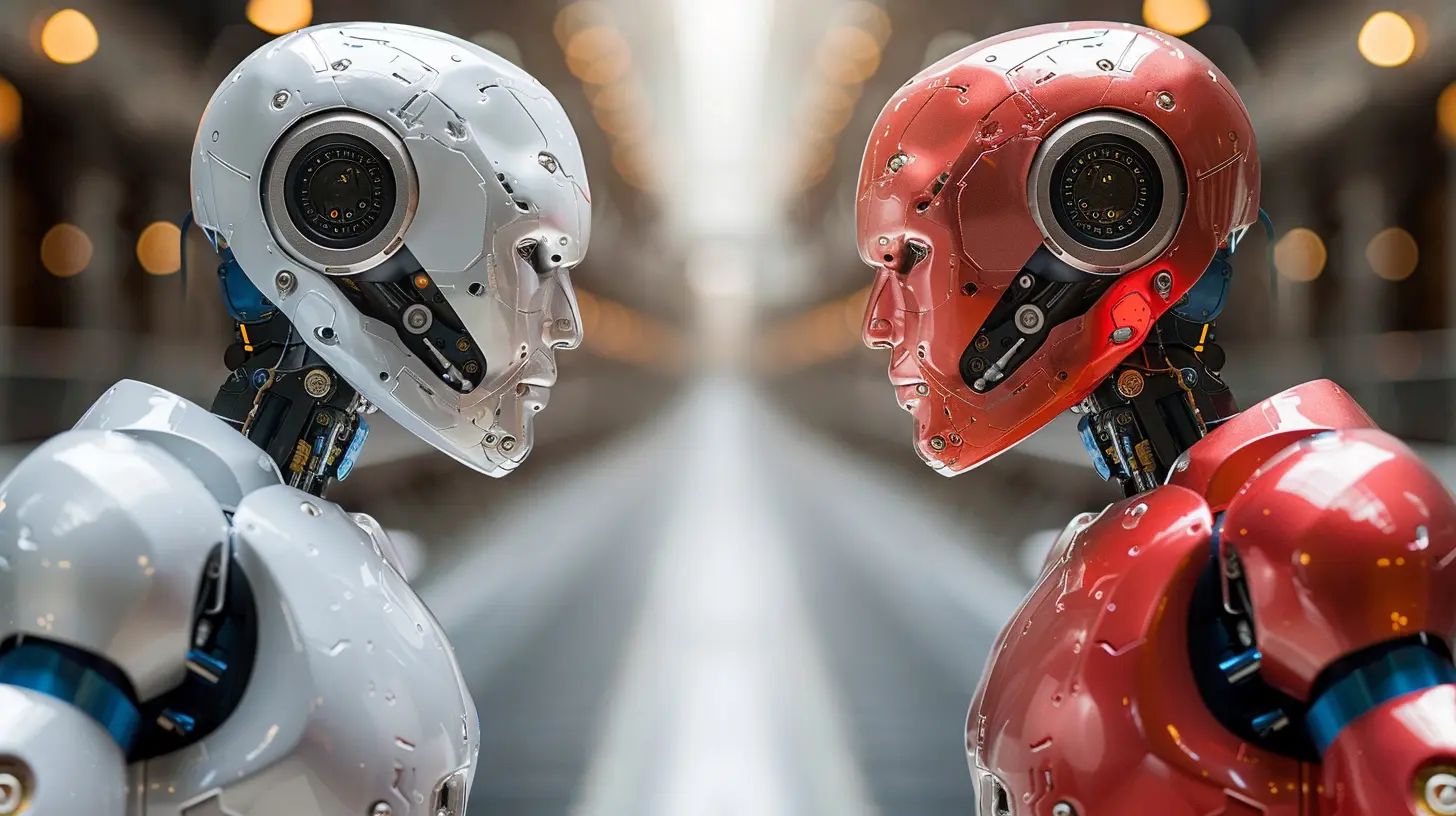
How Venture Capital Kickstarted the AI Boom
Let’s break it down, step by money-soaked step.1. Spotting Potential in Dorm Rooms and Garages
Venture capitalists have an eye for spotting genius. They’re the ones who believed in a young Zuckerberg, after all. In the AI field, they’ve been funding ambitious founders even before their products were fully baked.Got a scrappy prototype that can detect sarcasm in text? VC firms might just hand you $2 million to polish it up.
2. Turning Ideas Into Scalable Companies
An idea is cute. A startup is cooler. But a scalable company that could become the next Google? That’s what VCs dream about.VCs don't just throw money at you and ghost. They bring in networks, mentorship, technology partners, growth strategies—heck, even PR teams. Essentially, they turn your idea into a revenue-cranking machine.
3. Encouraging Risk-Taking and Innovation
You're not likely to mortgage your house to test a funky AI-powered dog translator. But venture capitalists might actually fund that. (Okay maybe not yet, but give it time.)By absorbing the risk, VCs allow startups to push boundaries that traditional businesses wouldn’t touch with a 10-foot pole. AI has a high rate of failure—VCs accept that and bet on the few that will change the world.
Major VC-Funded AI Wins (And the Unicorns That Followed)
Let’s name-drop for a moment. You’ve probably heard of:- OpenAI – ChatGPT's proud parent, initially a non-profit, but hey, even they needed big bucks. Microsoft dropped a cool $1B into them.
- UiPath – Think robotic process automation with an AI twist. VCs nurtured it from Romanian startup to IPO superstar.
- DataRobot – Making machine learning accessible to non-data scientists. Total VC funding? Over $700 million.
- Nuro – Self-driving delivery bots funded by some of the biggest names in VC.
These aren’t just companies—they're AI juggernauts. And guess what most of them have in common? That's right: a healthy injection of venture capital at just the right time.
Why AI Startups Are Irresistible to Investors
Let’s talk about the elephant in the room—or maybe the robot?VCs LOVE AI startups. But why?
A. Massive Market Potential
AI is everywhere and growing faster than your spam folder. From healthcare and finance to retail and farming, there’s hardly a sector AI doesn’t touch. The total addressable market? Trillions with a “T.”B. High Scalability
AI products, once built, don’t need to sleep, take lunch breaks, or join labor unions. They can scale globally at lightning speed. That’s music to a VC’s ears.C. Competitive Moats
AI models improve over time. The more data they get, the better they are. This creates strong “moats” around companies—defensive walls that competitors struggle to breach.The Different Flavors of VC in AI
Not all venture capital is created equal. Some focus only on AI, while others dabble across tech sectors. Let’s look at a few types:1. Early-Stage VCs
These are the daredevils. They invest in AI startups when they’re still scribbles on a napkin. It’s risky, but the payoff can be massive.2. Growth-Stage Investors
Now we’re talking big money. These investors jump in once the startup’s proven its worth with initial traction.3. Corporate VCs
Think Google Ventures, Intel Capital, or NVIDIA Inception. These guys often have a strategic interest in the tech and can supercharge a startup with their infrastructure, customers, and brand power.Challenges VCs Face in the AI World
It’s not all rainbows and IPOs. Venture capitalists also face their fair share of headaches in AI investing.? Ethical Landmines
AI can get messy. Think biased algorithms or surveillance tools. VCs have to weigh the moral implications of what they fund.⚠️ Hype vs. Reality
Some AI startups are all sizzle, no steak. They throw around terms like “deep learning,” “quantum AI,” or “self-aware chatbot,” but under the hood? Just a fancy spreadsheet.VCs need to dive deep to separate the real from the ridiculous.
⏳ Long Timelines
AI breakthroughs often take time. Years of research, testing, and tweaking. That means VCs have to be patient—and that’s not exactly their strong suit.The Future of AI and VC: Where’s It All Heading?
So what’s next? Will VCs keep pouring money into AI forever?Here’s the likely roadmap:
? More Global Investments
Expect to see more funding flowing into AI startups outside Silicon Valley—think India, Africa, Eastern Europe, and Latin America. Talent is global, and VCs are realizing it's a mistake to ignore that.? AI + Other Tech Marriages
AI is dating around. Blockchain? They’re flirting. IoT? Already moved in together. VCs are especially interested in startups that blend AI with other disruptive technologies.? Responsible AI Becomes Non-Negotiable
VCs are starting to wake up to the fact that “move fast and break things” doesn’t fly when your app accidentally denies people a mortgage because of skin color.Ethical AI investments will be a key trend moving forward.
So... Is VC a Hero in the AI Story?
Honestly? Yeah, kinda.Are there drawbacks? Absolutely. Are some VCs just chasing the next shiny thing? You bet. But at the end of the day, venture capital has played a monumentally important role in launching AI from the lab to the real world.
Without VC support, we’d still be stuck asking Siri if she loves us (and getting no for an answer).
So next time you use an AI-powered app or get your groceries delivered by a robot, just remember: there’s a VC firm somewhere popping champagne — and a founder breathing a sigh of relief.
Final Thoughts
The explosion of AI and machine learning didn’t just happen. It was funded, fueled, and finessed by the deep pockets and sharp minds of venture capitalists who dared to dream big.From backing bold ideas to sustaining long-term innovation, VCs have become the fairy godmothers of the AI revolution. And with no signs of slowing down, we can expect a future filled with even more AI magic—likely backed by the folks willing to bet it all on the next wild idea.
So who knows? Maybe your quirky idea for a robot that tells dad jokes just needs the right pitch—and an angel investor with a sense of humor.
all images in this post were generated using AI tools
Category:
Venture CapitalAuthor:

Miley Velez
Discussion
rate this article
1 comments
Otto McLean
Venture capital is crucial in driving innovation in AI and machine learning. It fuels startups, accelerates research, and transforms cutting-edge ideas into impactful technologies... a game changer.
July 24, 2026 at 12:59 PM
Miley Velez
Absolutely, venture capital is a key driver in this space. It not only provides the necessary funding but also supports the bold ideas that are shaping the future of AI and machine learning.