The Role of Automation in Reducing Business Risk
24 August 2026
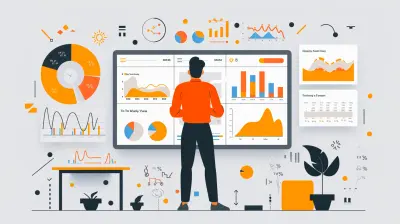
In today's fast-paced world, businesses face a constant balancing act—staying competitive while minimizing risks. Whether it's financial instability, human error, cyber threats, or operational inefficiencies, risks lurk around every corner. But here's the good news: automation is changing the game.
Automation isn't just about making life easier; it's about creating a fail-safe system where risks are identified, mitigated, and even eliminated. So, let’s dive into how automation plays a crucial role in reducing business risks and why it’s a must-have in today’s business landscape. 
What Is Business Automation?
Before we get ahead of ourselves, let's clarify what we mean by "automation." In simple terms, automation refers to using technology—software, AI, robotics, or machine learning—to handle repetitive tasks without human intervention.Think of it as your digital assistant that never sleeps, never complains, and never makes mistakes (as long as it's programmed correctly). Businesses use automation for tasks ranging from invoicing and customer service to cybersecurity and supply chain management.
But how does this help reduce risks? Let’s break it down. 
How Automation Reduces Business Risks
1. Minimizing Human Errors
Let’s face it—mistakes happen. Employees can mistype a number, forget a deadline, or misunderstand instructions. Unfortunately, small errors in business can lead to massive consequences.Automation eliminates these issues by taking over repetitive and rule-based tasks. For example:
- An automated payroll system ensures employees are paid accurately and on time.
- AI-driven financial software minimizes accounting errors.
- Automated workflows ensure compliance with regulations, reducing legal risks.
With automation, businesses can breathe easy knowing that critical tasks are handled flawlessly.
2. Enhancing Cybersecurity
Cybercrime is one of the fastest-growing threats to businesses today. Hackers are evolving, and manual security systems just don’t cut it anymore.Automated cybersecurity solutions continuously scan for vulnerabilities, detect suspicious activities, and respond to threats in real-time. AI-driven security tools can:
- Identify and block phishing attempts before employees even see them.
- Monitor network activity 24/7, instantly flagging unusual behavior.
- Automatically update security patches, preventing cybercriminals from exploiting weaknesses.
By leveraging automation, businesses can significantly reduce their exposure to cyber threats and safeguard sensitive data.
3. Improving Compliance and Regulatory Adherence
Regulatory compliance is a nightmare for many businesses. Whether it's GDPR, HIPAA, or financial reporting laws, failing to comply can result in heavy fines or legal action.Automation simplifies compliance by:
- Tracking and storing critical documentation.
- Automatically flagging non-compliance issues.
- Generating audit-ready reports with minimal human intervention.
Instead of fearing regulatory checks, businesses can stay ahead of compliance requirements effortlessly.
4. Strengthening Supply Chain Resilience
Supply chain disruptions can cripple a business. From late shipments to unexpected shortages, managing a supply chain manually is a recipe for disaster.Automation transforms supply chain management by:
- Using AI to predict demand and prevent overstocking or stockouts.
- Tracking shipments in real-time to avoid delays.
- Automating purchase orders and vendor communications to ensure smooth operations.
With an automated supply chain, businesses can react quickly to disruptions and maintain steady operations.
5. Enhancing Decision-Making with Data Analytics
Making business decisions based on gut feelings is risky. Data-driven decisions, on the other hand, give businesses a competitive edge.Automation enhances decision-making by:
- Collecting and analyzing vast amounts of data in real-time.
- Identifying trends and patterns to predict future risks.
- Generating reports and insights for strategic planning.
With automated data analytics, businesses gain a clearer picture of their performance and can make informed choices rather than rolling the dice.
6. Reducing Employee Burnout and Increasing Efficiency
Overworked employees are more prone to mistakes, stress, and ultimately, burnout. A burned-out workforce is not only unproductive but also a liability to the business.Automation steps in to handle repetitive and time-consuming tasks, allowing employees to focus on more meaningful work. This leads to:
- Higher job satisfaction.
- Increased productivity.
- Lower turnover rates, reducing the cost and risks of constant hiring.
Happier employees mean a smoother-running business, and that’s a win-win for everyone. 
Examples of Automation in Action
Let’s look at how automation is already reducing business risks in various industries:Banking and Finance
- Fraud detection systems use AI to identify suspicious transactions.- Automated compliance checks help prevent financial penalties.
Healthcare
- AI-assisted diagnostics reduce the risk of misdiagnoses.- Automated patient records enhance data security and accuracy.
Retail and E-commerce
- Chatbots handle customer inquiries, minimizing the risk of human error in customer service.- Automated inventory management prevents stock shortages.
Manufacturing
- Robots handle hazardous tasks, reducing workplace injuries.- Automated quality control systems ensure consistent product standards.
No matter the industry, automation is proving to be a game-changer in risk reduction. 
Is Automation a Threat to Jobs?
One common concern about automation is that it will replace human jobs. While it's true that automation reduces the need for manual tasks, it doesn’t necessarily mean job losses. Instead, it shifts the focus from repetitive tasks to more strategic and creative roles.Think of it this way—automation is like an autopilot system for an airplane. The pilot is still needed, but instead of manually controlling everything, they can focus on critical decision-making and emergency handling.
Businesses that embrace automation don’t just reduce risks; they create new opportunities for employees to grow and contribute in ways that truly matter.
Final Thoughts
Automation isn’t just a luxury anymore—it’s a necessity. By automating processes, businesses can minimize human errors, strengthen cybersecurity, ensure compliance, optimize supply chains, and make data-driven decisions.If you’re still relying on manual processes, it’s time to rethink your strategy. Automation isn’t about replacing humans; it’s about empowering businesses to run smarter, faster, and safer.
So, are you ready to reduce risks and future-proof your business with automation? Because the future belongs to those who embrace technology, not fear it.
all images in this post were generated using AI tools
Category:
Business AutomationAuthor:

Miley Velez
Discussion
rate this article
2 comments
Cara McCallum
Automation significantly enhances risk management by streamlining processes, minimizing human error, and ensuring compliance. By integrating automated systems, businesses can proactively mitigate potential risks and improve overall operational efficiency.
September 3, 2026 at 11:46 AM
Miley Velez
I appreciate your insights. Automation indeed plays a crucial role in enhancing risk management and operational efficiency. It's exciting to see how businesses are leveraging these technologies to navigate challenges more effectively.
Brandon Gutierrez
In a world where shadows linger, automation shines bright, carving paths through uncertainty. It dances lightly, turning chaos into clarity, safeguarding dreams while nurturing growth. With each calculated step, businesses find strength, weaving resilience into their fabric, transforming risks into opportunities, and painting a future rich with promise.
August 28, 2026 at 3:11 AM